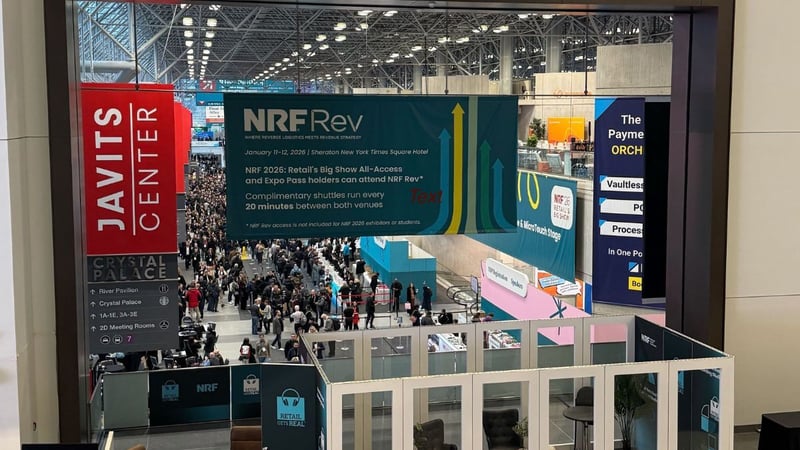





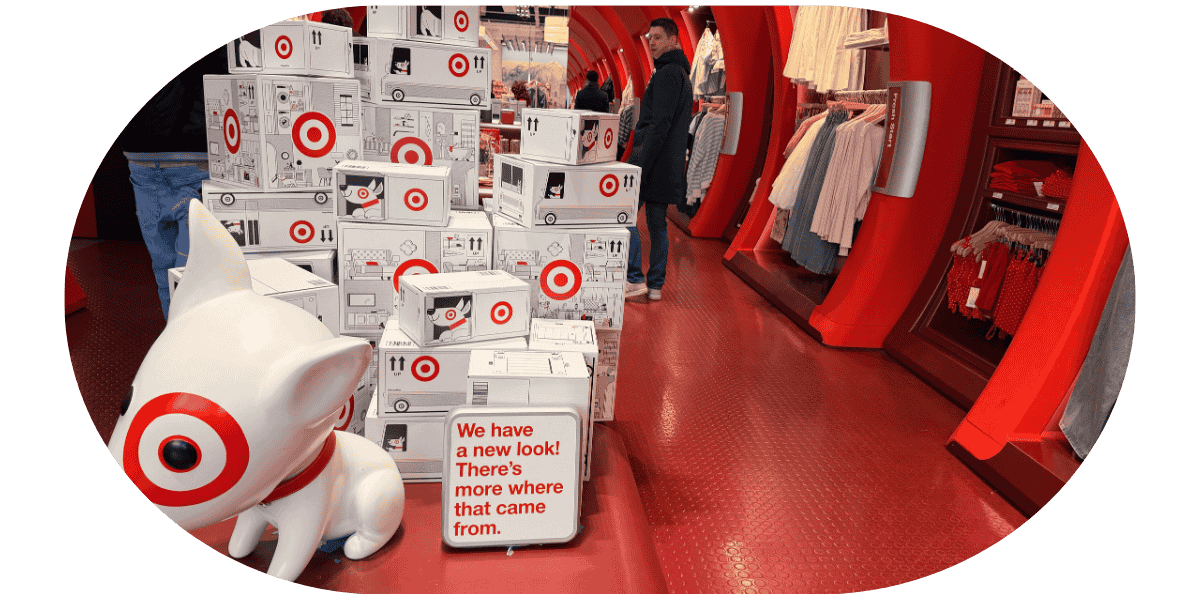
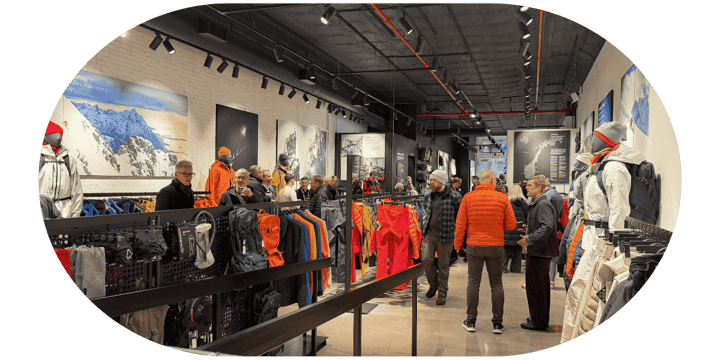
NRF isn’t just about keynotes, buzzwords, and the occasional “we’re using AI to reinvent shopping” booth pitch. It’s also about seeing what’s happening in the real world. That’s why this trip mixed the conference experience with retail safaris across Manhattan, visiting stores that are actively testing what modern commerce looks like when the customer’s expectations are shaped by convenience, culture, and technology, all at once.
Below is a high-level summary of some of the most important themes that stood out during NRF 2026, with a particular focus on what matters for retailers who want to stay relevant in an era of AI, agentic commerce, new ecosystems, and shifting customer behavior. And just to be clear: this is only the headline version. The real value comes after the event, when we sit down with our clients and move from inspiration to execution. In those conversations, we go deeper into questions like:
- What strategy will actually win in modern retail?
- Which technologies deserve priority (and which ones deserve a polite “not now”)?
- How do you stay profitable while still moving forward?
- And how do you become a retailer that customers and AI agents choose?
Because in the end, the goal isn’t to attend the biggest show. It’s to build the kind of retail business that wins after the show is over

1. Agentic AI changes how people buy - not why
Agentic AI is rapidly taking over the HOW of shopping: searching, comparing, filtering, even executing purchases. That part will increasingly be automated, optimized, and delegated. What doesn’t change is the WHY. People still care about identity, trust, values, quality and how a brand makes them feel.
Retailers shouldn’t try to outsmart or outbuild the agents. That’s a race they won’t win. Instead, the goal is to become the brand that an agent confidently recommends because customers keep choosing it, returning to it, and trusting it over time. Machines can optimize efficiency, but only brands can create meaning.
2. The real competition moves upstream - before the customer ever sees you
In an agentic world, the most important moment in the customer journey often happens before the customer ever visits your site, app or store. The decision is increasingly pre-made by an agent that has already filtered the options.
If that agent doesn’t clearly understand what you sell, why you’re trustworthy, and what actually makes you different, you’re simply not part of the consideration set. Being “nice to browse” or having a beautiful frontend is simply no longer enough. Retailers must be easy to explain to both humans and to machines, or they won’t even enter the race.
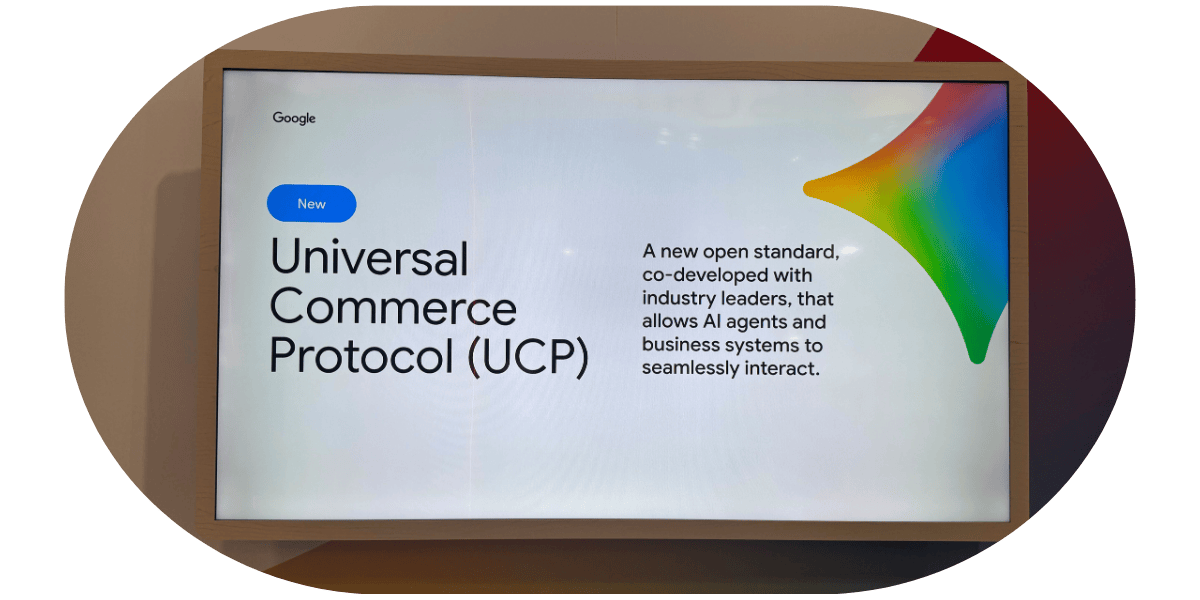
3. Big tech doesn’t want your brand - they want your customer interface
Google, OpenAI, and Amazon all repeat the same message: “We want to help retailers.” And to be fair, they do. Their tools can genuinely improve discovery, efficiency and conversion.
But they also want to own the interface where intent starts and decisions are made. Whoever controls the conversation, the recommendation, and the context controls a large part of the value. If retailers don’t actively protect their role, they risk being reduced to a fulfillment option quietly operating behind someone else’s assistance.
4. Ecosystems are useful servants - terrible masters
NRF made one thing very clear: the future of commerce is interoperable, composable and connected. UCP (Universal Commerce Protocol), ACP, agent stacks, shared data layers and AI services all point in that direction. That’s a good thing.
What’s dangerous is drifting into ecosystems by convenience instead of choice. Retailers should absolutely use ecosystems for reach, speed and scale. But identity, loyalty, customer understanding and meaning should not be outsourced.
5. Stores evolve into sensory proof engines
Physical retail isn’t disappearing. It’s being reassigned. In an increasingly digital and agent-mediated world, the store’s primary role becomes reducing uncertainty and creating confidence.
This is where customers can touch materials, smell products, meet real people and feel whether a brand is genuine or not. Texture, scent, atmosphere and human interaction are things no agent can simulate properly. If a store doesn’t increase confidence or reduce doubt, it’s no longer a strategic asset but simply an expensive warehouse with music.
6. AI should remove friction - not humanity
Consumers across age groups are generally comfortable with AI handling comparisons, administration, search and logistics. In many cases, they expect it. What they don’t want is AI pretending to be human or when they feel they are being tricked.
Retailers create value by using AI to remove friction and complexity from the journey, not by automating empathy or faking authenticity. AI should clear the path and people should do the connecting, because when those roles are mixed up, trust erodes very quickly.
7. Cost discipline quietly separates winners from “AI tourists”
AI doesn’t automatically make retail cheaper or more profitable. What it does is expose how disciplined a retailer really is. Building the right ecosystem means making conscious choices about what actually creates value and what simply adds complexity.
Being boring about ROI, prioritization, and focus isn’t conservative. It’s competitive.
8. Slow and steady, fast and experimental, at the same time.
Some parts of retail must never break. Payments, compliance, customer data and order integrity need to work every hour of every day. They are the foundation of trust.
At the same time, other parts of the business can and should move faster. Discovery, content, service flows and internal tools can be temporary, “good enough” and replaceable. This two-speed approach allows retailers to stay modern and innovative without gambling the business on every new wave.
9. NVIDIA reminds us: AI isn’t just digital and customer-facing - it’s everywhere
NVIDIA’s presence at NRF is a reminder that AI is not only about chat interfaces and digital experiences. It’s increasingly about the physical world: cameras, space optimization, forecasting, warehouse flow and labour planning.
For many retailers, this is where the real margin improvement lies. The biggest AI wins may never be seen by customers at all, because they happen behind the scenes, quietly improving efficiency, reducing waste and making operations smarter.
10. Convenience can be outsourced - differentiation cannot
Logistics platforms, cloud AI services and search infrastructure are powerful accelerators. Outsourcing them can be a smart move. But outsourcing the things that define why customers choose you is a long-term mistake.
Retailers should constantly ask themselves what must be uniquely theirs and what can safely be rented. Convenience can be borrowed; differentiation cannot. Getting that balance right is one of the most important strategic decisions retailers will make in the coming years.
Want to go deeper, much deeper? We're here for you! Contact us today to set up a meeting.