


What is a Multisite?
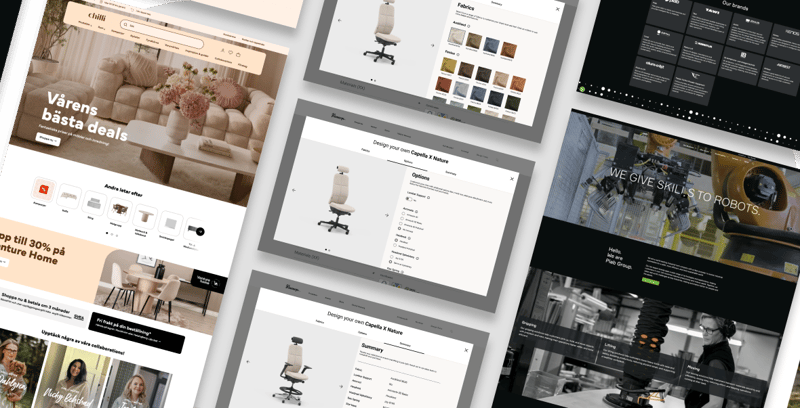
A multisite is a setup where multiple websites are built on top of a shared system, using the same structure, components, and underlying logic. Instead of creating and maintaining each site independently, teams work from a common foundation that can be reused and adapted across different sites. This makes it easier to ensure consistency while still allowing for local variations, such as different languages, markets, or brand expressions. As a result, organizations can manage and scale multiple sites more efficiently, launching new ones faster without having to rebuild everything from scratch each time.
The Multisite Challenge
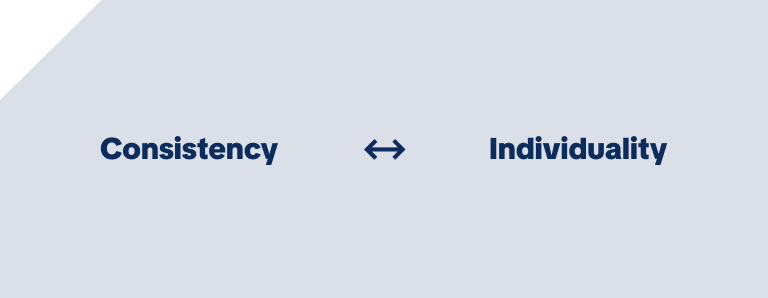
Designing for a multisite across different brands means balancing two forces that naturally pull in opposite directions: consistency and individuality. On one hand, you want a shared system that simplifies design, development, and maintenance. On the other hand, each brand needs enough flexibility to feel distinct and true to its identity, with its own voice, visual expression, and customer experience.
Without a clear approach, this can quickly lead to either fragmentation, where every site feels disconnected, or over-standardization, where brands lose their character. Both scenarios create inefficiencies and weaken the overall experience.
The real challenge is to design a system that provides structure without being restrictive, that is, a foundation that holds everything together while still giving brands the space to express what makes them unique.
In practice, this often comes down to separating what should be shared from what should be flexible. Structure, such as layouts, components, and interaction patterns, can be standardized to drive efficiency and consistency. Expression, including color, typography, and visual tone, should remain adaptable to reflect each brand’s identity. When this balance is clearly defined, multisite setups become easier to scale without losing what makes each brand distinct.
The Case of Chilli and Trendrum
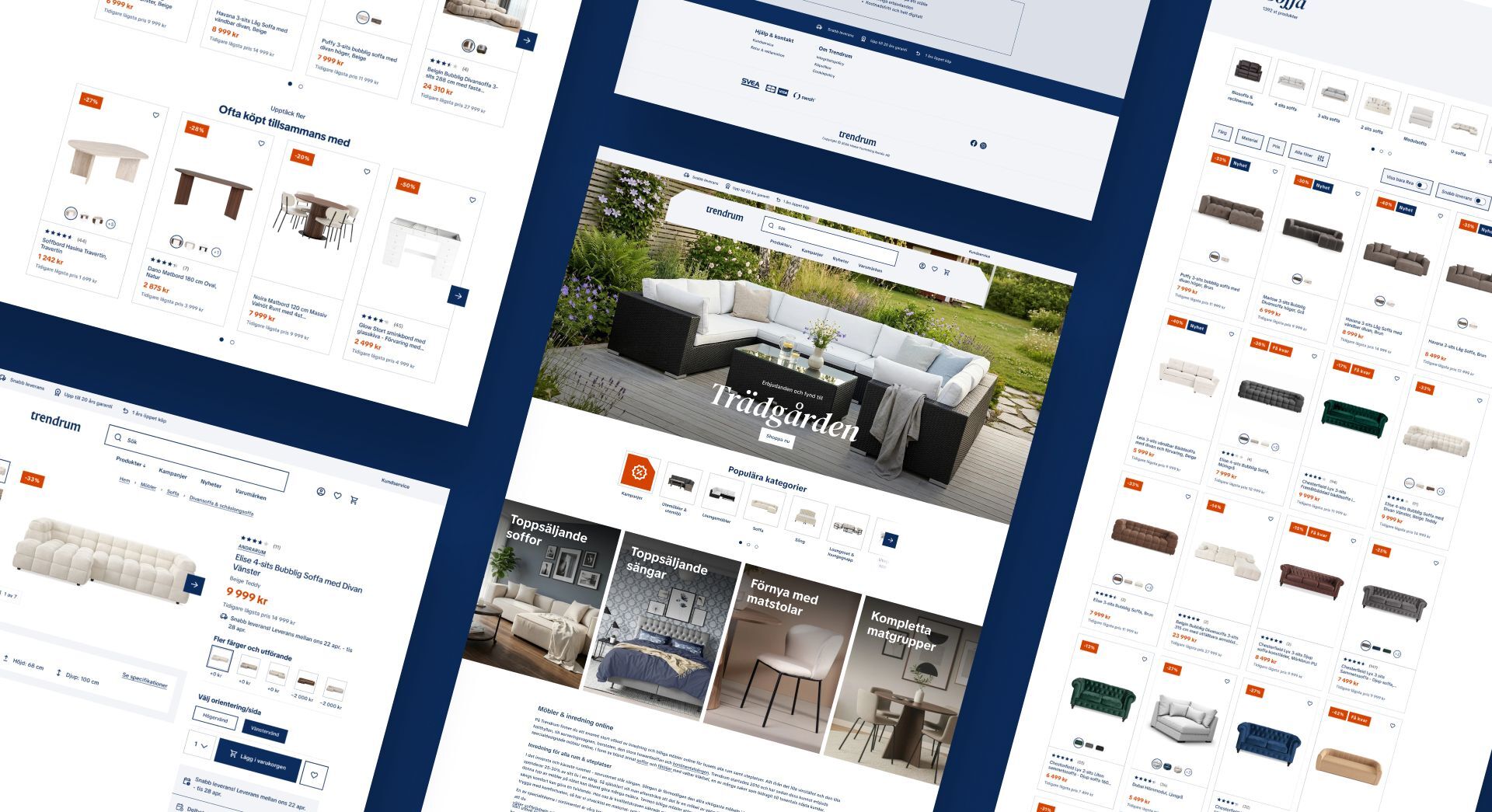
Chilli and Trendrum, two brands part of Home Furnishing Nordic, faced the abovementioned challenge. As two distinct brands operating within the same system, the goal was to create a unified foundation that ensured speed and consistency while still allowing each brand to express its own identity clearly and independently.
Trendrum’s website was built to follow the proven success of Chilli's new site. Rather than reinventing the structure, the goal was to reuse what already worked and remove as much friction as possible in both design and development.
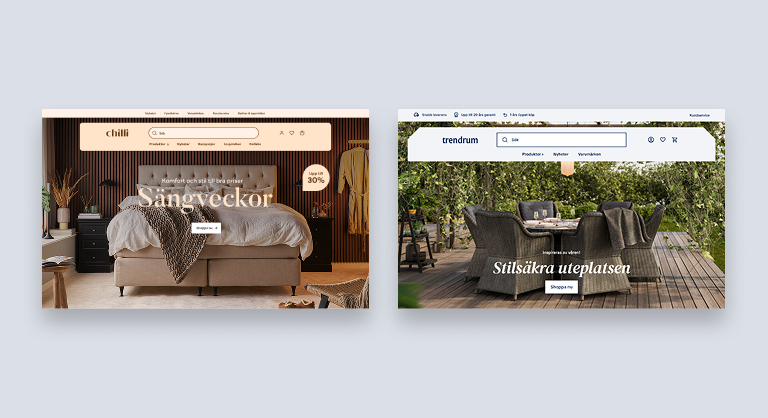
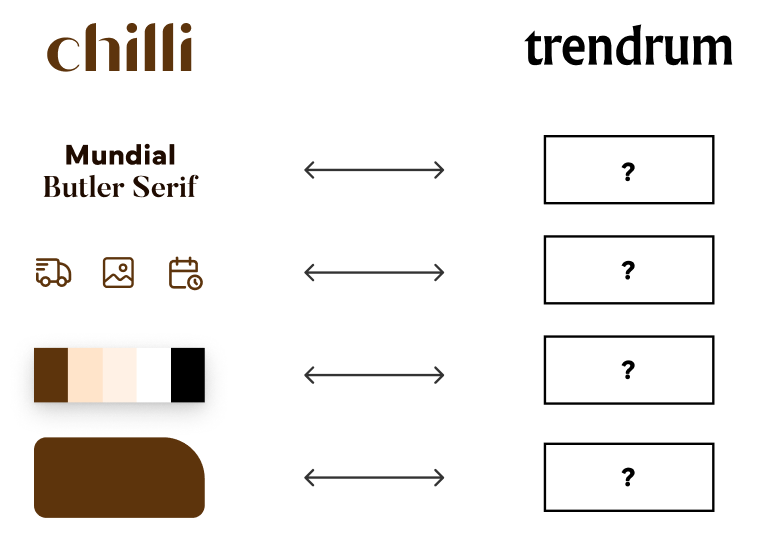
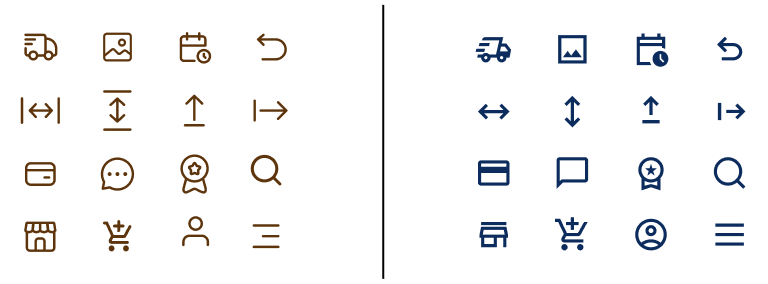
To achieve this, Avensia designed Trendrum’s visual identity in a 1-to-1 relationship with Chilli’s. For every key element in Chilli’s system, there was a direct counterpart in Trendrum: primary and secondary typefaces, color structure, iconography, forms, and components all followed the same underlying logic. This allowed for consistency and efficiency to be maintained across the system, while still giving Trendrum its own distinct visual expression.

Letting the Brand Drive the Change
Even with a shared system in place, the brand itself had to lead the direction. Rather than forcing a predefined design onto Trendrum, we used its identity as the guiding principle for how the system should be expressed.
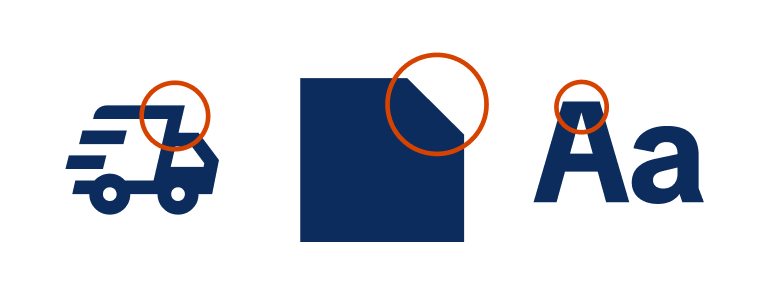
A key driver was Trendrum’s logo, whose sharp edges set the tone for the entire visual identity. That characteristic informed everything from typography to UI elements, creating a clear and cohesive direction. At the same time, it helped intentionally distance the brand from Chilli’s softer shapes and warmer color palette, ensuring that, even within the same system, Trendrum felt distinct and true to its own identity.
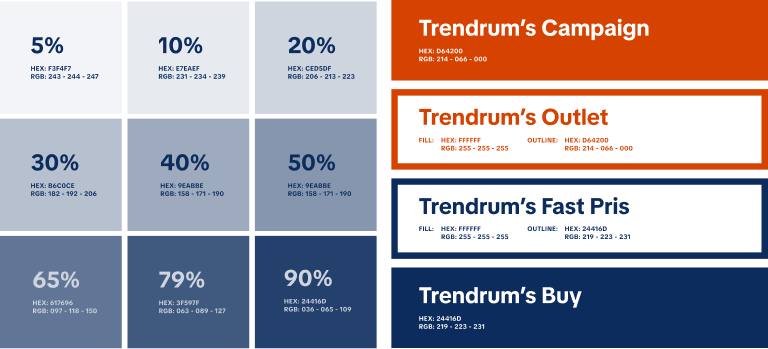
One deliberate design decision was to build the entire color system around Trendrum’s primary blue. All supporting colors, except for the campaign color, were created as tints of that blue, including what would traditionally be neutral greys, which instead became subtle blue tones. This pushed the brand further away from Chilli, while also creating a strong visual hierarchy. When campaign colors are introduced, they stand out with maximum contrast, as nothing else in the system competes for attention.

.png?width=768&height=709&name=Group%201400%20(1).png)
Designing for Speed and Scalability
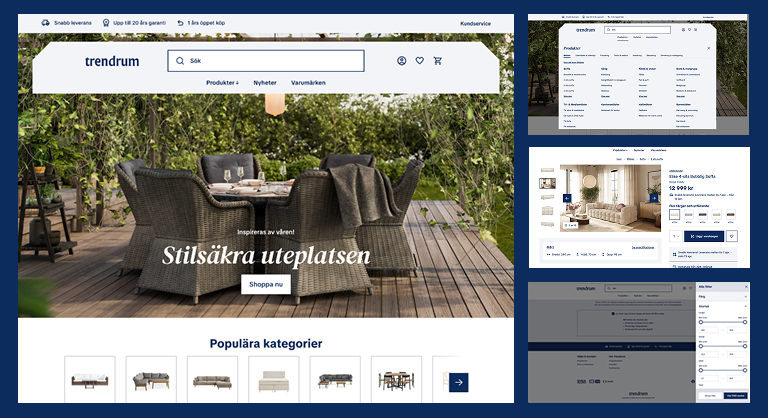
From the start, the system was built with both speed and scalability in mind. By creating a 1-to-1 structure between Chilli and Trendrum, we reduced the need to rethink or rebuild components. Everything had a clear counterpart, which made implementation faster and more predictable.
This approach also ensured that the system could grow over time. New features, pages, or even additional brands can be added without breaking the foundation. By combining system thinking with close alignment between brands, we created a setup that is not only efficient to build but also easy to maintain and scale.
Outcome and Impact
The result was a unified multisite setup that balances efficiency with clear brand distinction. By building on a shared system and maintaining a 1-to-1 structure, we significantly reduced design and development time, making launches faster and management easier going forward.
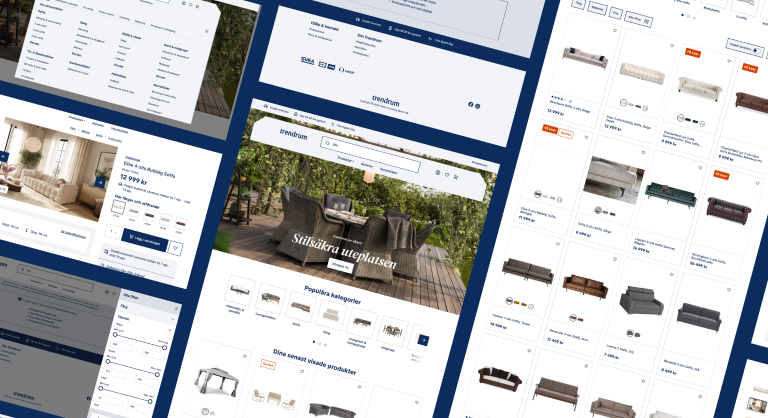
At the same time, Trendrum established a distinct visual identity within that system. The brands feel connected but not identical, each with its own character, while benefiting from the same scalable foundation. This creates long-term value, both in day-to-day operations and in the platform's ability to grow further. More importantly, it shows how a well-designed multisite can move from being a technical solution to becoming a strategic asset for managing and evolving multiple brands over time.
Connected, Not Identical
A well-designed multisite is less about uniformity and more about coherence. It creates a shared language that connects brands without silencing their differences. Ultimately, the strength of a multisite is not in how similar everything looks but in how clearly each brand can stand on its own while still being part of something bigger.
.jpg?width=800&height=800&name=Legal%20Guarantee%20(3).jpg)