


1. Reviewing the Visual Identity
Whether a brand is newly defined or already well established, its visual identity plays a key role in how digital experiences perform. Some projects start with a strong identity; others need refinement. In both cases, understanding the brand is a critical first step.
At its core, it comes down to clarity. Companies need alignment around the position they want to hold in the market and whether their visual elements support that position and the business goals behind it.
A useful way to establish this clarity is to ask a few fundamental questions:
-
How do we want the outside world to perceive our brand?
-
Where do we position ourselves on key spectrums?
-
Are we traditional or trendy? Playful or serious?
-
Is our pricing premium or low?
-
Do our visual elements clearly communicate this position?
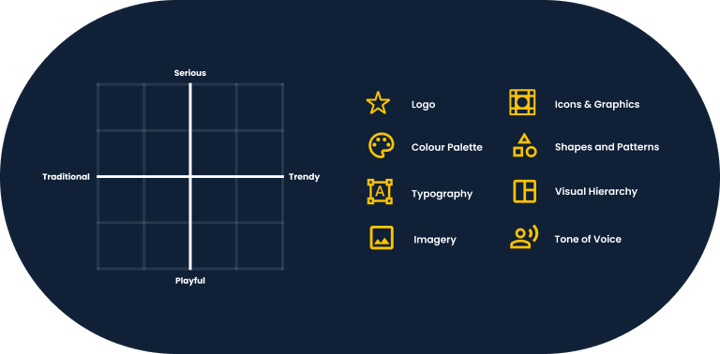
When reviewing a company’s visual identity, close attention should be paid to elements such as the logo, color palette, typography, imagery, icons and graphics, shapes and patterns, layout systems, and tone of voice to ensure overall alignment. This approach considers whether the brand position is consistent across markets and, if not, whether any variations are intentional and justified.
Ultimately, this leads companies to the most important question of all:
-
Is your current identity doing the job you need it to do today, or is it time to evolve?
2. Unlocking Experience Potential
Once the brand foundation is clear, moving to the user experience is key. This typically involves analyzing how users move through the digital ecosystem and where friction prevents conversions. This includes mapping out key user journeys such as:
-
Organic traffic journeys
-
Paid traffic journeys
-
AI chat–assisted journeys
-
Email and social media journeys
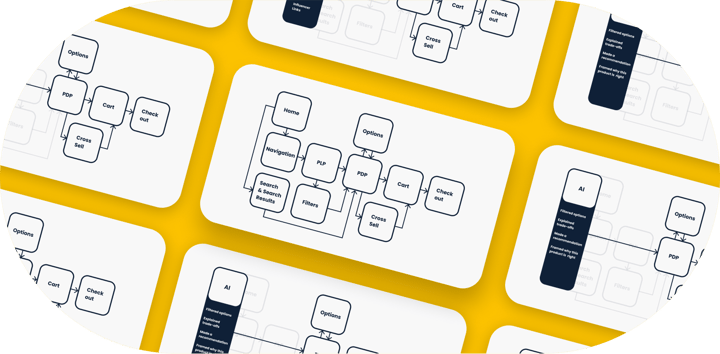 By mapping these elements, it becomes possible to identify pain points, areas of confusion, drop-offs, and missed opportunities. From there, the best possible experience is designed based on:
-
Proven UX and conversion best practices
-
Accessibility (A11Y), ensuring inclusive experiences and removing barriers that often hurt conversion without being obvious
The goal is simple: remove friction, increase clarity, and guide users naturally toward meaningful actions.
3. Continuously Raising the Bar
A great launch is just the beginning. After go-live, it can be highly valuable to shift focus to continuous improvement through data-driven decision-making. Instead of relying on assumptions, brands can simply let real user behavior guide them.
This process can look like this:
-
Identify the biggest friction points and opportunities in the user journey, based on clear data points
-
Form a clear hypothesis for why the issue exists
-
Design a better solution based on that hypothesis
-
Run an A/B test comparing the current version with the new solution (typically over 10 days)

At the end of each test, we either have:
-
A new winning solution, or
-
Valuable insight proving our hypothesis was wrong
Either way, it’s a win. When this process is applied to customers, the value of repeating it becomes clear. The iterative loop ensures the website doesn’t stand still but continues to evolve alongside user behavior, market conditions, and business goals.
Design, User Experience, and Data Working Together
The strongest and most impactful brands are shaped, among other things, by clear positioning, thoughtful execution, and continuous data-driven learning. When branding, UX, and data work together, the result is not only a better-looking website but a more effective one. By combining strategic brand clarity, conversion-focused design, and continuous optimization, companies can create digital experiences that are both meaningful and measurable. That’s how stronger brands and greater impact are built.