




The Digital Product Passport
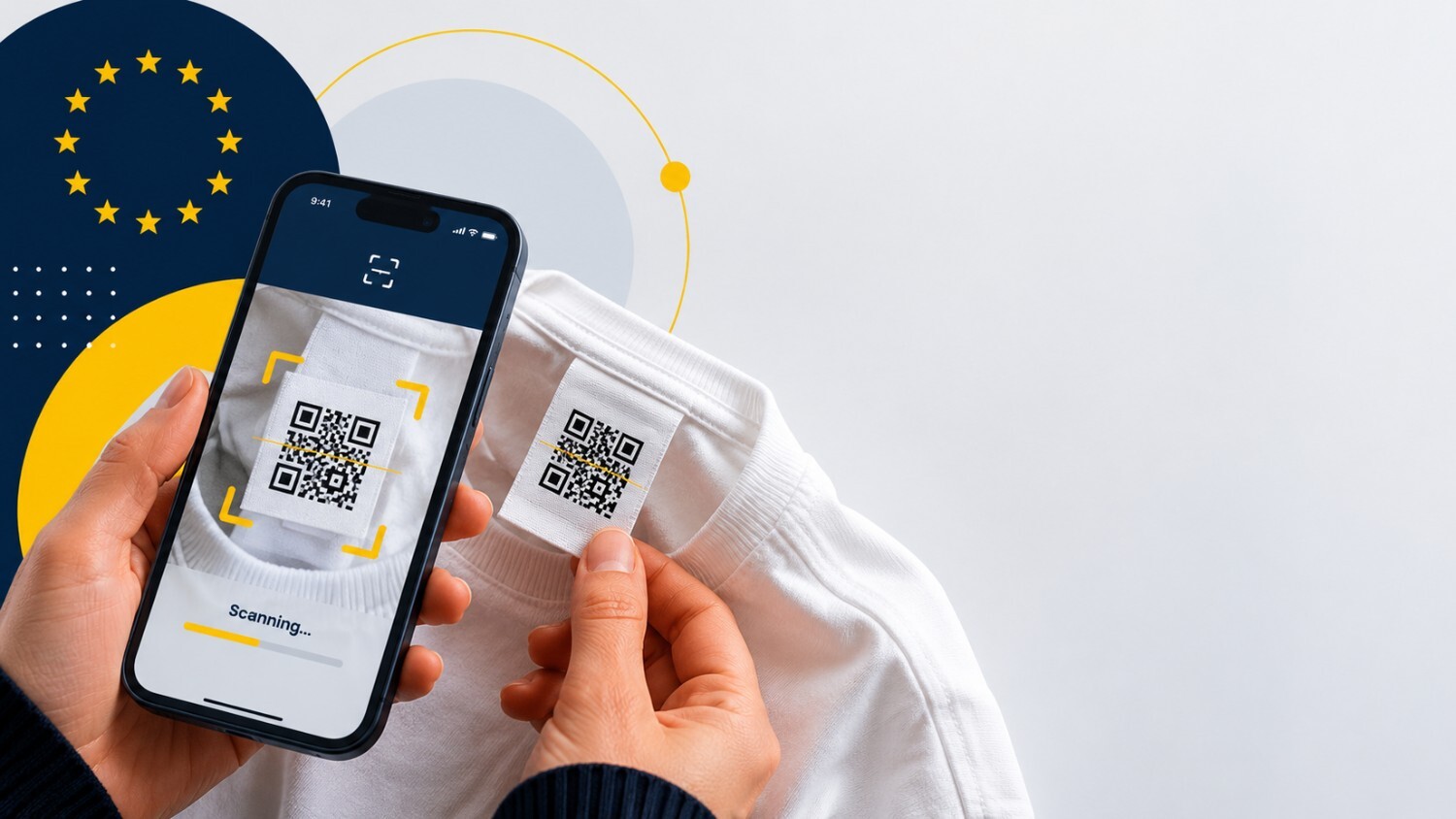
A Digital Product Passport (DPP) is a standardized digital record linked to a physical product. It provides machine-readable information about a product's entire lifecycle. The aim is to achieve full traceability and transparency on a product's origin, production methods, ingredients, and carbon footprint.
But a DPP is not only about a product's past, it's also about its future. It includes information such as repair and recycling instructions, helping to support more sustainable and circular business models. The passport can be accessed through technologies such as QR codes, RFID tags, or NFC chips attached to the product.
Today, information about a product's origin and journey is often difficult to access. In many cases, even the companies selling products do not have complete visibility into their supply chains. Under the new EU regulation, most products sold in Europe will be required to have a digital product passport. Some sectors, such as food and pharmaceuticals, are exempt because they are already covered by other regulations. The requirement applies not only to European manufacturers, but to any company selling products in regulated categories within the EU market.
ESPR and The Green Deal
The DPP is the centerpiece of the EU's Ecodesign for Sustainable Products Regulation (ESPR), which came into force as part of the European Green Deal in 2019, the EU's vision for a climate-neutral economy by 2050. The product information requirements themselves are thereby not entirely new and most originated within the ESPR. What is new is that this information now needs to be structured and distributed in a standardized way. Not all the requirements are finalized, as this is a fast-moving space where definitions are still being constructed.
What Goes Into a Passport?
The specific data requirements vary by product category and will be defined in stages, but the ESPR sets out a core framework that every DPP must cover. Every product needs a unique identity: a GTIN (Global Trade Item Number), a product name, and a digital link for identification. Alongside that comes material and composition data: what substances are used, as well as compliance and regulatory documentation. Different kinds of products will require different compliance and regulatory data, like REACH certificates and safety instructions.
These will look very different depending on whether you're making paint, batteries, or clothing. The passport must capture how a product is meant to be used, maintained, and repaired. Supply chain information is required, as are sustainability data and end-of-life information.
A Layered System By Design
One of the most deliberate principles in the DPP legislation is that not everyone sees the same data. The passport is built as a layered access system that balances three objectives simultaneously: enabling transparency for consumers and authorities, ensuring enforceability for regulators and market surveillance bodies, and protecting sensitive commercial information.
Public authorities will have full access to the complete product passport. Manufacturers, distributors, and suppliers will have structured but limited access based on their role. End consumers will have user-friendly access to a curated subset of product information.
The Supply Chain Is The Hard Part
A product is only as strong as the weakest link in its supply chain. By setting clear requirements and standards across the entire chain, the DPP framework ensures that incoming data is accurate, consistent, and usable, from producer to end customer. For a product with dozens of components sourced from multiple countries, assembling verified, structured data about every input requires deep supplier engagement that many supply chains are simply not yet equipped to provide. Most manufacturers also rely on legacy enterprise systems that were never designed to capture or share the granular sustainability data that DPPs require. Integration is a significant technical undertaking.
Who Is Responsible?
Brands and producers selling products in the EU must provide a digital product passport in line with the applicable regulations. Retailers must verify that a valid passport exists, as without one, they will not be permitted to sell the product.
Where Things Stand In 2026
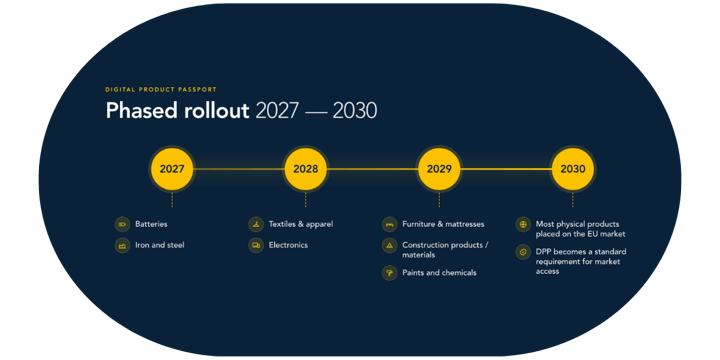
The regulatory machinery is now in motion. The European Commission is expected to launch a centralized digital DPP registry in July 2026, the infrastructure backbone that will store passport data, provide public search and comparison tools, and serve as the basis for enforcement. Passports for batteries, iron, and steel will become mandatory in February 2027. For textiles and apparel, it will become mandatory in 2028, and by 2030, most physical products on the EU market must carry a Digital Product Passport.
A Global Standard In The Making
While the DPP is an EU initiative, its implications are global. Any company exporting to Europe must comply, making the EU framework effectively the default for international manufacturers. China is reportedly developing parallel state-administered product data systems, which may create interoperability challenges. How different regional frameworks will be reconciled or not will be one of the defining trade and technology policy questions of the next decade.
The Digital Product Passport represents a fundamental shift in how products are documented, tracked, and governed across their lifetimes. With the central registry launching this year and battery passports becoming mandatory in early 2027, the DPP is transitioning from policy into operational reality. For businesses, the question is no longer whether to prepare, it's how quickly.